Listen for attack and decay
Wind instruments vary in more than pitch. The attack is the beginning of a note: a sharp tap, a soft knock or a bright strike. Decay describes how the sound fades. An instrument with a long, ringing decay can remain audible well after the breeze has passed, while a wooden knock may disappear almost immediately. Listen for the full sequence rather than choosing from the first pleasant note.
A recording can help compare general character, but phone microphones and speakers change what you hear. Listen to the actual instrument if you can. Try gentle movement as well as a stronger swing, and ask whether several overlapping notes still feel comfortable. A calm demonstration indoors is not the same as an exposed garden on a gusty afternoon.
Choose material without assuming volume
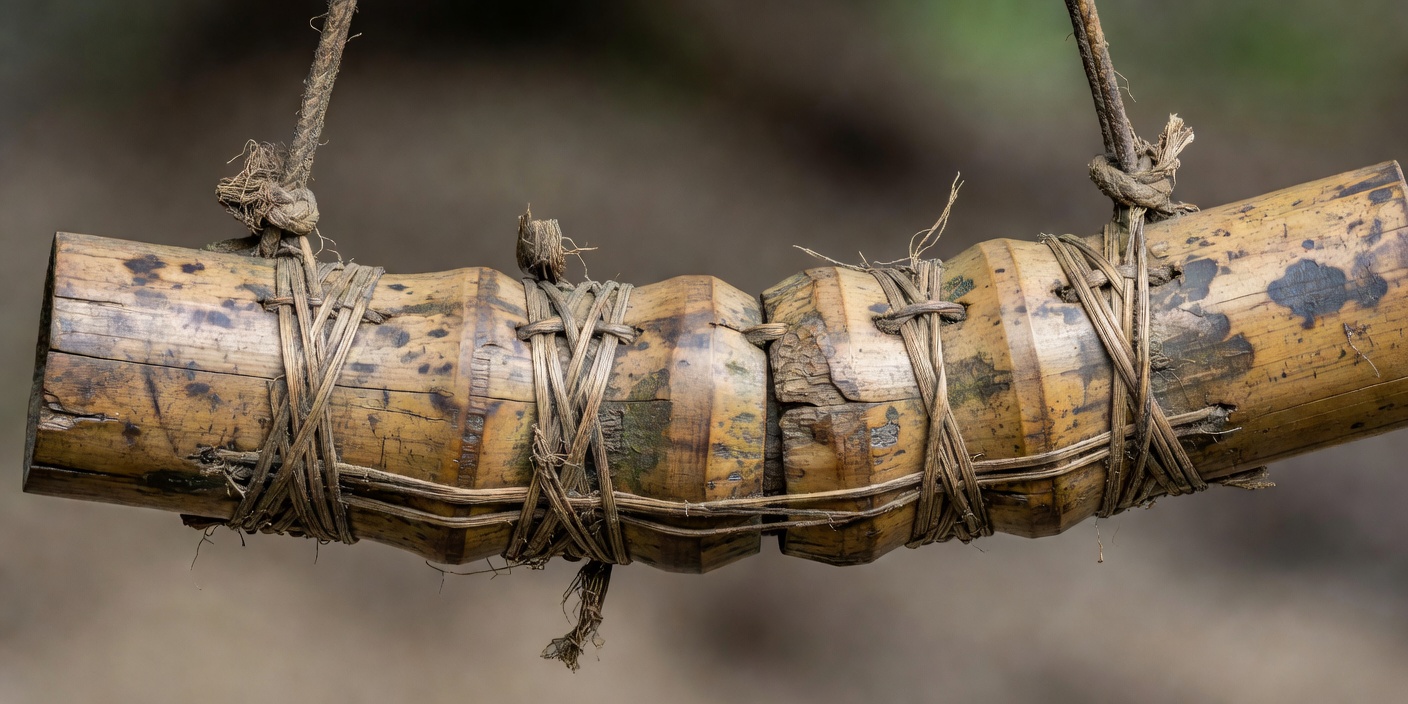
Bamboo and wood often have a short, percussive character. Metal tubes can sustain a clearer pitched tone. Shell, ceramic and glass pieces may make irregular clicking or bright impacts. These are tendencies, not promises: dimensions, wall thickness, striker hardness and the suspension system can change the result substantially. A large bamboo instrument can be more intrusive than a small, restrained metal one.
| Material | Listen for | Care concern |
|---|---|---|
| Bamboo or wood | Hollow knocks; shorter notes | Splits, trapped moisture and worn cord |
| Metal tubes | Pitch, sustain and overlapping strikes | Corrosion, sharp edges and loose fittings |
| Ceramic or shell | Irregular taps and brighter transients | Breakage and storm movement |
A named musical scale does not guarantee that an instrument will suit your household. If a family member finds unpredictable sound distracting, give that preference real weight. Silence is a valid design choice, not an unfinished stage.
Test a sheltered hanging place
Start with a location inside the garden, away from shared windows and fence lines. A place sheltered from the strongest prevailing wind may produce occasional notes rather than continuous activity. Avoid using a resonant fence panel or lightweight structure as the mounting point, since vibration can become an additional sound you did not intend.
Use a secure support rated for the load and movement involved. Leave clearance around the instrument so it cannot strike glazing, branches, people or another object. Check the mounting point from ground level and keep it accessible for removal without unsafe reaching. Do not attach hardware that can damage a tree or tighten around a growing branch; ask an arborist about suitable options if a living tree is the only available support.
Move your chair and listen from different positions. Sound that seems delicate beneath the instrument may be conspicuous across a hard courtyard. Check during a genuinely breezy period, not only on the still day when you installed it.
Make stopping simple
Choose a design with a practical way to silence it. Depending on the instrument, this could mean securing or removing the striker in accordance with the maker’s instructions, or bringing the whole piece indoors. Keep the method quick and reachable. A solution that requires a ladder is unlikely to be used every evening.
Agree quiet periods with your household and consider neighbors before a problem develops. Unpredictable notes can travel into bedrooms when windows are open, even if you cannot hear them from indoors. Local noise rules differ, and daytime operation can still be a nuisance. If someone raises a concern, silence the instrument while you investigate rather than treating your own listening position as the only relevant one.
Can I leave wind chimes out overnight?
Only where doing so is considerate and lawful. Our practical default is to silence decorative instruments overnight, particularly near homes or open windows.
Let leaves do some of the work
Before adding another instrument, listen to the planting. Leaves and grasses can introduce movement with less mechanical repetition, although they will not make sound in every weather condition. Match plants to your climate, soil, available space and local ecological advice. Avoid invasive species and do not choose a plant solely for an imagined sound.
Keep a short record over a week: when the instrument plays, how long it continues, and whether you still enjoy it. Inspect cords and fixings after strong wind, and remove damaged pieces promptly. One well-placed instrument, used selectively, can provide more pleasure than several competing sources. The breeze does not need to perform all day.
Plan safe seasonal checks →